Kaleidoscopic Days
Kaleidoscopic Days es una serie fotográfica que explora la vida cotidiana a través de un lenguaje visual hipnótico, revelando una nueva perspectiva sobre lo ordinario.
La idea de la rutina como algo casi hipnótico me acompañaba desde hacía tiempo, pero fue durante el confinamiento en España, provocado por la crisis sanitaria global, cuando el proyecto tomó finalmente forma. Durante ese periodo, los objetos cotidianos, los gestos y los rituales diarios se llevaron al límite, convirtiéndose en la base del lenguaje visual de la serie.
Kaleidoscopic Days no es ni un diario ni un registro documental de un momento concreto. Es un proyecto abierto que sigue evolucionando más allá de las circunstancias que inspiraron su origen. Las fotografías se construyen a partir de fragmentos de mi propia vida cotidiana, situando el trabajo dentro del territorio del autorretrato. Al mismo tiempo, estos objetos y situaciones resultan universalmente familiares, lo que permite al espectador reconocer aspectos de su propia rutina y crea un diálogo sutil entre la experiencia personal y la colectiva.
La serie abarca desde recetas preparadas justo después de cada fotografía —menestra de verduras de temporada, revuelto de setas, pimientos asados con chistorra, lubina al horno— hasta escenas domésticas íntimas como cambiar el pañal de mi bebé, trabajar desde casa, hacer ejercicio en el interior o documentar las herramientas tecnológicas que pasaron a formar parte del día a día. Otras imágenes retratan el pacharán casero de mi padre junto a botellas de vino, transformando un simple bodegón en una reflexión sobre los rituales nocturnos y la dimensión íntima de la existencia cotidiana.
El proceso de producción también evolucionó junto con el propio confinamiento. Al principio fotografié la serie en mi estudio con luz artificial, para después posproducir cada imagen. Sin embargo, a medida que pasaban las semanas, la necesidad de aire fresco y luz solar me llevó a la terraza, donde la luz natural se convirtió en una parte esencial del proyecto. Los contrastes más marcados, los colores más ricos y las sombras más profundas aportaron una nueva intensidad visual al trabajo, mientras que el simple gesto de salir al exterior se convirtió en una forma diaria de terapia.
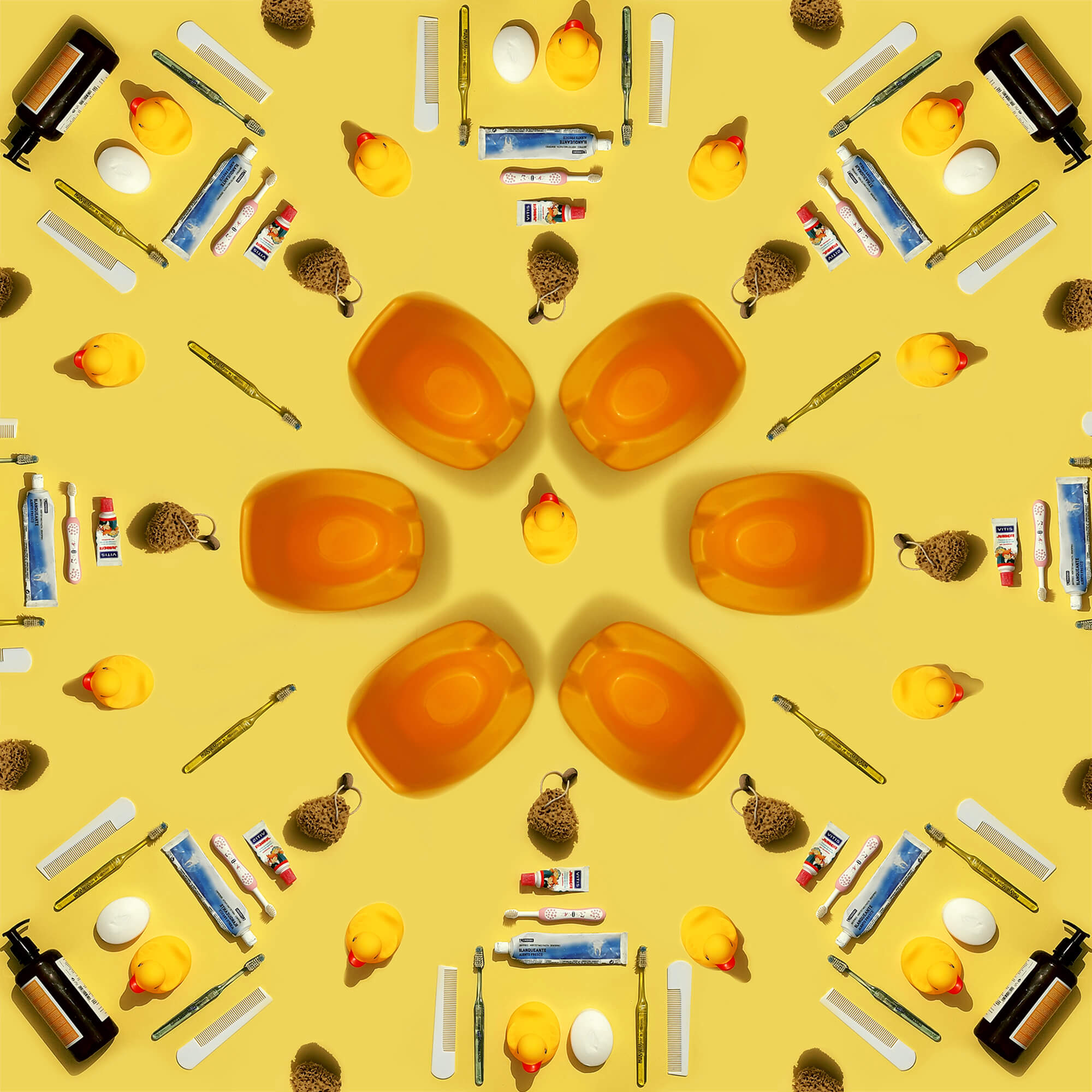
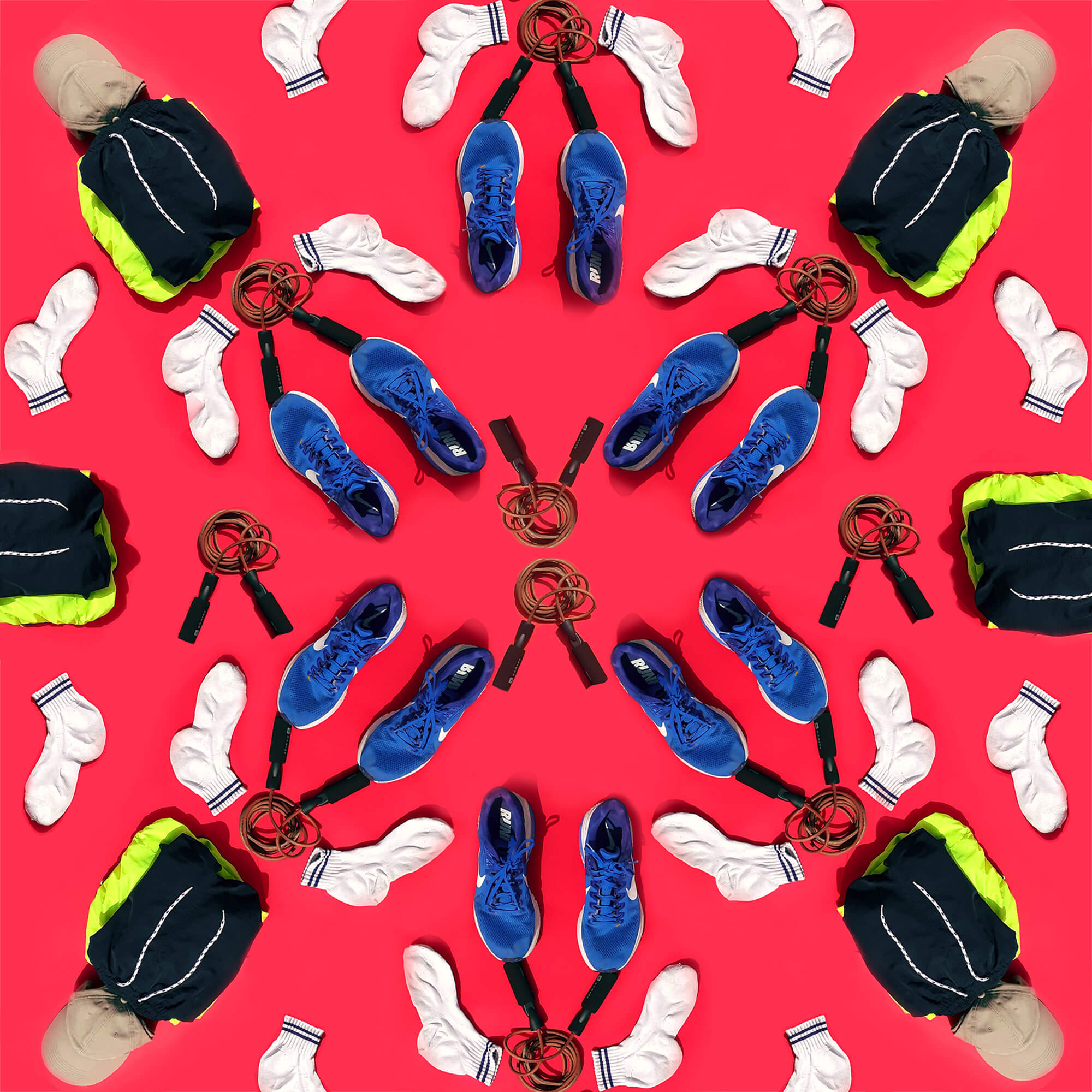
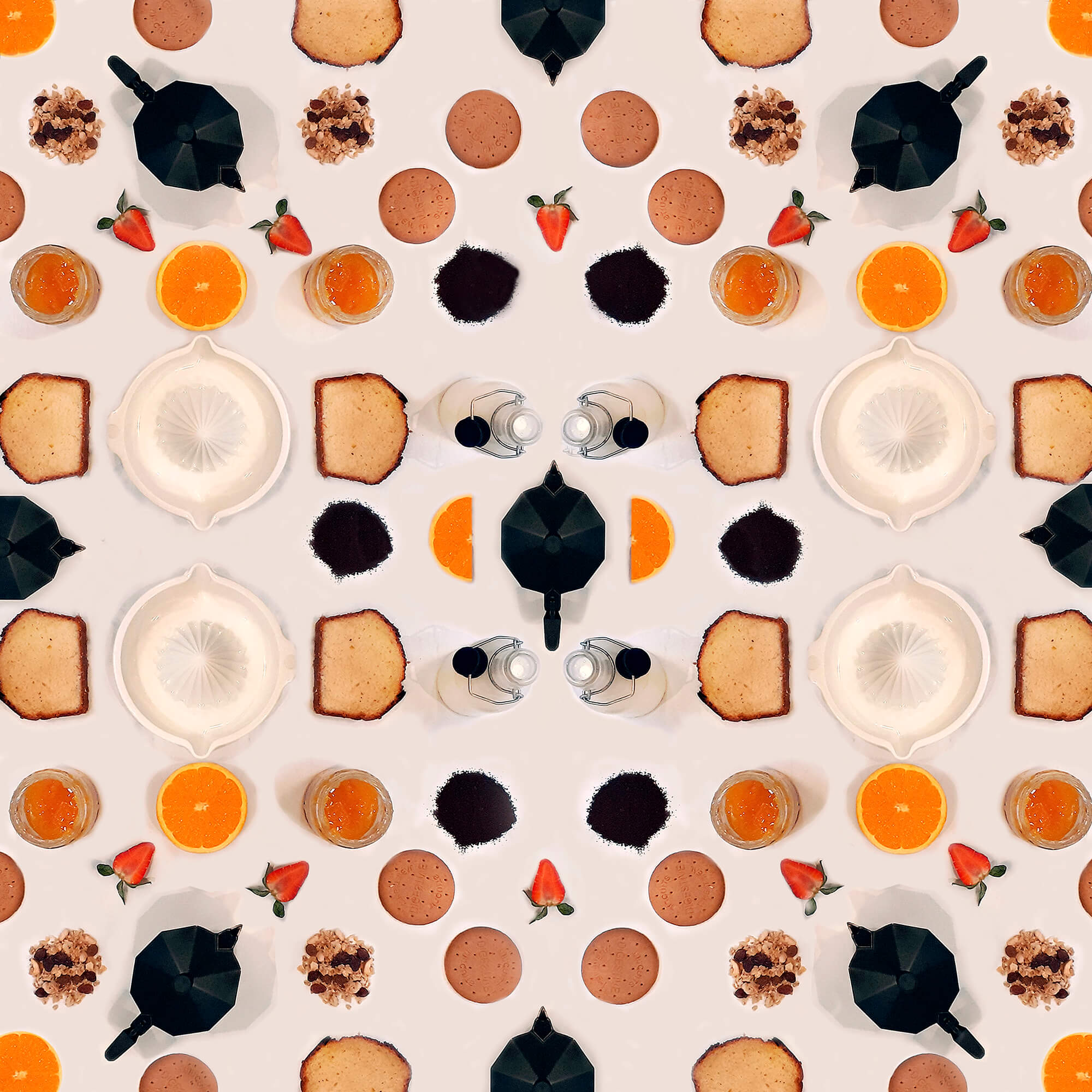
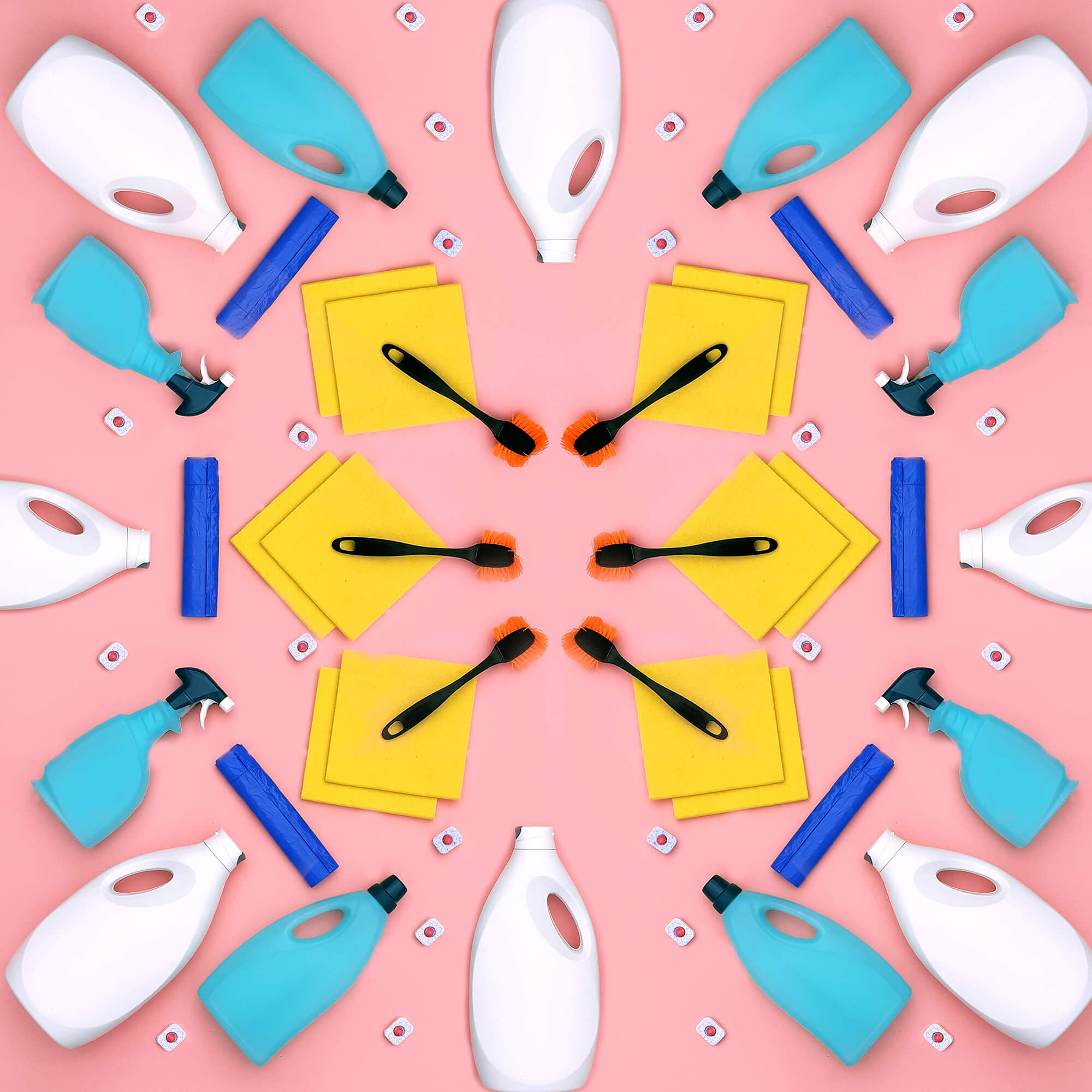
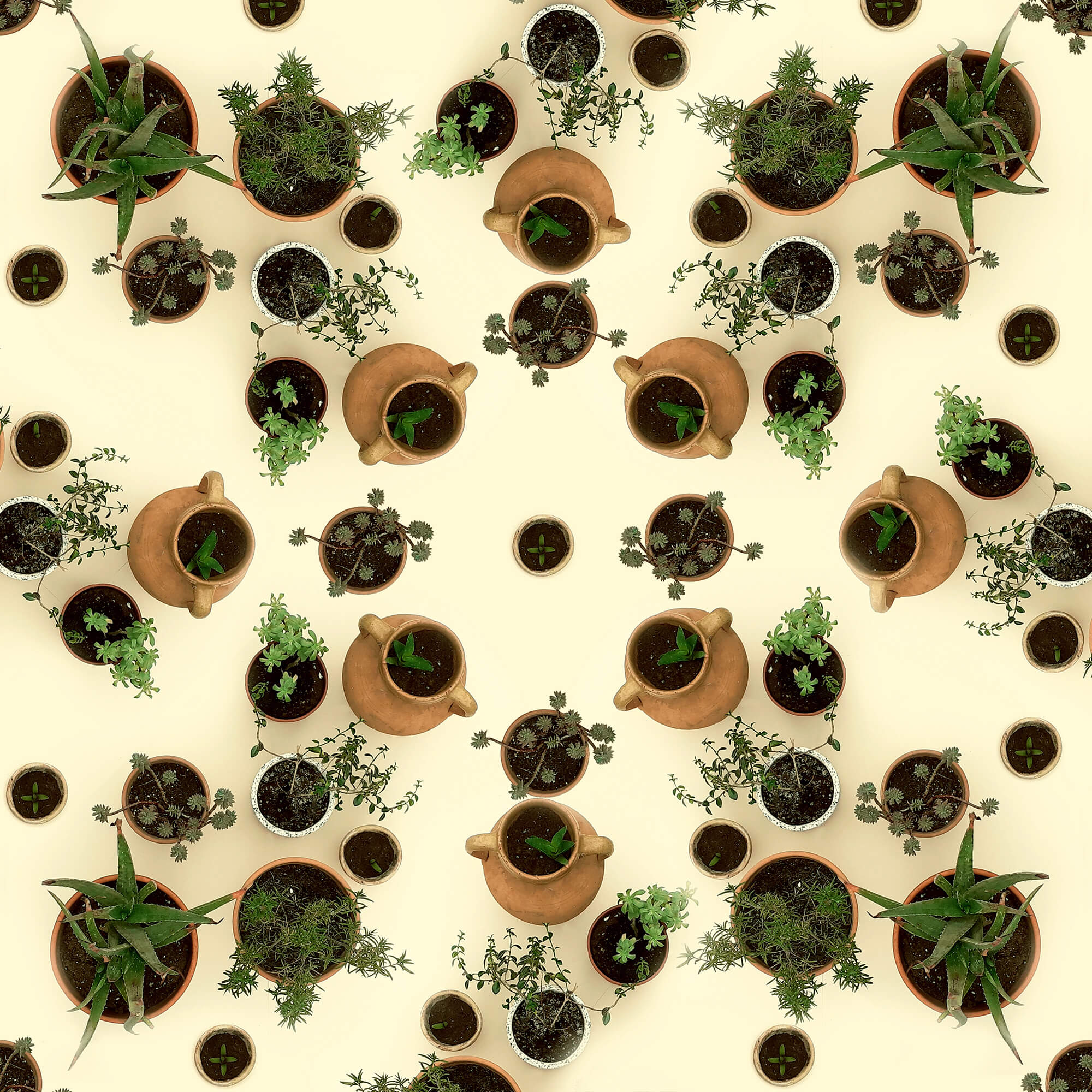
La dirección de arte desempeña un papel central a la hora de transmitir el lenguaje visual del proyecto. Los fondos monocromáticos aíslan las composiciones, dirigiendo por completo la atención del espectador hacia la disposición de los objetos. A través de simetrías cuidadosamente construidas a 45°, 90° y 180°, los elementos cotidianos pierden su identidad individual y pasan a formar parte de patrones geométricos más amplios. Vistas a vuelo de pájaro, estas composiciones evocan repetición, vértigo e inmersión visual, transformando objetos ordinarios en paisajes casi abstractos.
Geometría, estética, simetría, inmersión, repetición e hipnosis definen el vocabulario visual de Kaleidoscopic Days. El proyecto busca presentar lo mundano a través de una mirada estética, generando al mismo tiempo una sutil sensación de desorientación visual que invita al espectador a reflexionar sobre la naturaleza repetitiva de su propia vida cotidiana.
El propio título refleja esta intención. La palabra calidoscopio procede del griego kalós (bello), eîdos (forma o imagen) y skopeîn (observar). Combinada con la palabra Days (días), se convierte en una forma de describir el acto de observar fragmentos de la realidad cotidiana a través de un sugerente dispositivo óptico, transformando lo familiar en algo inesperado.
Kaleidoscopic Days es una serie fotográfica que explora la vida cotidiana a través de un lenguaje visual hipnótico, revelando una nueva perspectiva sobre lo ordinario.
La idea de la rutina como algo casi hipnótico me acompañaba desde hacía tiempo, pero fue durante el confinamiento en España, provocado por la crisis sanitaria global, cuando el proyecto tomó finalmente forma. Durante ese periodo, los objetos cotidianos, los gestos y los rituales diarios se llevaron al límite, convirtiéndose en la base del lenguaje visual de la serie.
Kaleidoscopic Days no es ni un diario ni un registro documental de un momento concreto. Es un proyecto abierto que sigue evolucionando más allá de las circunstancias que inspiraron su origen. Las fotografías se construyen a partir de fragmentos de mi propia vida cotidiana, situando el trabajo dentro del territorio del autorretrato. Al mismo tiempo, estos objetos y situaciones resultan universalmente familiares, lo que permite al espectador reconocer aspectos de su propia rutina y crea un diálogo sutil entre la experiencia personal y la colectiva.
La serie abarca desde recetas preparadas justo después de cada fotografía —menestra de verduras de temporada, revuelto de setas, pimientos asados con chistorra, lubina al horno— hasta escenas domésticas íntimas como cambiar el pañal de mi bebé, trabajar desde casa, hacer ejercicio en el interior o documentar las herramientas tecnológicas que pasaron a formar parte del día a día. Otras imágenes retratan el pacharán casero de mi padre junto a botellas de vino, transformando un simple bodegón en una reflexión sobre los rituales nocturnos y la dimensión íntima de la existencia cotidiana.
El proceso de producción también evolucionó junto con el propio confinamiento. Al principio fotografié la serie en mi estudio con luz artificial, para después posproducir cada imagen. Sin embargo, a medida que pasaban las semanas, la necesidad de aire fresco y luz solar me llevó a la terraza, donde la luz natural se convirtió en una parte esencial del proyecto. Los contrastes más marcados, los colores más ricos y las sombras más profundas aportaron una nueva intensidad visual al trabajo, mientras que el simple gesto de salir al exterior se convirtió en una forma diaria de terapia.
La dirección de arte desempeña un papel central a la hora de transmitir el lenguaje visual del proyecto. Los fondos monocromáticos aíslan las composiciones, dirigiendo por completo la atención del espectador hacia la disposición de los objetos. A través de simetrías cuidadosamente construidas a 45°, 90° y 180°, los elementos cotidianos pierden su identidad individual y pasan a formar parte de patrones geométricos más amplios. Vistas a vuelo de pájaro, estas composiciones evocan repetición, vértigo e inmersión visual, transformando objetos ordinarios en paisajes casi abstractos.
Geometría, estética, simetría, inmersión, repetición e hipnosis definen el vocabulario visual de Kaleidoscopic Days. El proyecto busca presentar lo mundano a través de una mirada estética, generando al mismo tiempo una sutil sensación de desorientación visual que invita al espectador a reflexionar sobre la naturaleza repetitiva de su propia vida cotidiana.
El propio título refleja esta intención. La palabra calidoscopio procede del griego kalós (bello), eîdos (forma o imagen) y skopeîn (observar). Combinada con la palabra Days (días), se convierte en una forma de describir el acto de observar fragmentos de la realidad cotidiana a través de un sugerente dispositivo óptico, transformando lo familiar en algo inesperado.
Collect this work — [ediciones relacionadas, pendiente de vincular]
Collect this work — [ediciones relacionadas, pendiente de vincular]
GALLERY — 14 images